Wolf dogs can't live in the wild and can't live in society, and the veterans who care for them at this sanctuary know exactly what that feels like. They both need to trust each other in order to heal.
Key Takeaways
Wolf dogs don't work as pets. They escape almost any enclosure, and their dog genetics mean they can't be released into the wild either.
The sanctuary pairs rescued animals with veterans because both know what it's like to be stuck between two worlds.
Trust is the treatment. Nobody, human or animal, is forced into a relationship they don't want.
Stan McDonald, a Navy Seabees veteran, has helped run the rescue since 2009 and credits the animals with keeping him sober.
Founder Dr. Lorin Lindner wants wolf dog breeding outlawed, and has offered to help write the legislation herself.
Story Summary
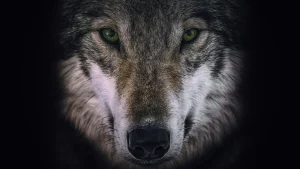
People buy wolf dogs because they want to own a little piece of the wild. It almost never ends well. The animals clear eight-foot fences, they can't settle into a house, and they can't be released either, because they're part dog. They end up caught between two lives. Dr. Lorin Lindner runs a sanctuary for the ones who had nowhere left to go, and she noticed something about the veterans she invited to work there. They understood that in-between feeling better than anyone.
One of them is Stan McDonald, who spent ten years in the Navy Seabees and met Lorin while he was in rehab. He helped her build the rescue in 2009 and never left. He'll tell you plainly that the animals keep him sober. Veterans still come every month from the VA hospital, and the healing runs both ways. The wolf dogs arrive with their own trauma, trust comes slowly on both sides, and nobody is forced into a relationship they don't want. The sanctuary calls it reciprocal recovery.
Being accepted into a wolf pack takes patience but what it offers is invaluable. Lorin would rather the sanctuary didn't need to exist at all. She wants wolf dog breeding outlawed and has offered to help write the legislation herself. Until then, this is a film about finding a purpose, told by people and animals who found theirs in each other.
Learn more about Lockwood Animal Rescue and how you can help Wolfdogs and recovering VETS at https://lockwoodarc.org/
Transcript
People want to buy these animals because there's something about owning a piece of the wild. I decided very early on that I wanted to either go into veterinary medicine or biological sciences of some sort. Our field biology instructor brought in a wolf that was rescued by an organization and it was the first time I ever saw a wolf and I was fascinated. I never thought of having one of my own, but I thought I would do things to help wolves. Didn't think that I'd end up here with a sanctuary for them. In addition to the wolf dogs, I have been rescuing dogs for the last 20 years. I have dogs here roaming around. When I opened up this place, I wanted to bring veterans who were suffering from post-traumatic stress disorder, complex trauma. I brought them here to work with these wolves and wolf dogs. It was really the relationships with these animals that I saw significant changes. Hi, I'm Stan McDonald. I was in the United States Navy CBS for 10 years. I came up here after being in New Directions drug and alcohol rehab center where I met Dr. Lorin Lindner. Yeah. She already did and she came up here looking for property. She bought this place and she asked me if I wanted to come help build up a wolf dog rescue and I said yes. And that was at the beginning of 2009 and I have been here ever since. Combat vets here rescue foxes, wolves, and other animals that have been abused or neglected from illegal breeding operations and roadside zoos. Wolves and wolf like animals became very popular after Game of Thrones, Twilight. But for wolf dogs, they are not pets. They are part wild animals. Everyone that I know of that tried to live with a wolf dog in their home environment have not been successful. Many other people discovered that these animals can jump 8 ft fences with one leap. They can climb fences. They can dig underground for quite a number of feet to get out of enclosures. And they were escaping enclosures. and they were killing the neighborhood dogs and cats. These animals are kept in crates most of their lives. They've come from horribly neglectful and insufficient situations where their needs are not met. They are suffering and we need to stop the breeding. If somebody asked me if they should get a wolf dog, I would tell them absolutely not. The only reason you want it is because of your ego that you can proudly go around and show this is what I got. Look what I got. Look what I got. You're not getting a wolf dog so you can have a dog as a companion. They can't own a wolfer. So what do they do? They go breed animals together until they get something that looks like it. Part wolf, part dog so they can legally have one. I feel bad every day to have any kind of enclosure around these animals because it's not natural for them. They need to be in the wild. I make sure that the animals know I'm here every day. I spend time with them. I don't go inside the enclosures. I stay outside of the enclosures. And those who want to come up and kind of sniff me or greet me, I can hand feed a treat through the fence. The other ones, I'll throw the treats to them. They don't want to approach me because they still are wild and I don't force them to develop a relationship with me if they don't want that. They need to be able to do their instinctual behaviors, but we can't release them either because of the dog content. The fact that they have dog genetics means that they really can't be out in the wild. And it's a real conflict. You could see the conflict in them. Over time, the animal and the veteran learn to trust each other and a transformation happens. Knowing that they have trauma, they have a story, they've come from bad conditions, and now they're doing better. Dodd works once a week at the sanctuary with animals that are smaller and more tame. Soon, he'll help care for the wolves and join a new path. The wolf dog and the veteran both have internal conflicts. This wolf dog can never be let out in the wild even though it has instincts in it for it. And it's never going to be good in your home because it doesn't have the full domestic instinct. So basically like the veteran trying to go to civilian life between military and civilian life gets kind of stuck in the middle. There's quite a bit of research showing the effect both physiologically, emotionally, behaviorally on humans from being around animals. Hi, Silver. I know. Hang on. What we recognized in working with these animals here, the wolves and wolf dogs, is that relationships are built on trust. And trust is something that's not easy to come by for a veteran who's suffering from post-traumatic stress disorder. Some of them will come up right away. Some of them it'll take a long time. You're learning patience. You're learning how to wait. You're learning trust. I learn something from each and every animal we rescue. Whether it be the wolf dogs, the coyotes, the raccoons, foxes, the parrots, every different animal has something different to teach you because they all have their own separate personalities. Everybody hears me keep saying find a purpose. That to me is the most important thing you can try to get across to a veteran who's having problems. What it is that I don't know. Mine just happened to be rescuing animals. We have veterans coming every month from the VA hospital who get to experience this wondrous program who get to be out in nature after living for months on end at the VA hospital. The changes that I notice within them even within a day is pretty miraculous. My name is Randy. I'm a Marine Corps veteran. and I just have to thank you so much. Um, my love was the horses. They have a soul connection to me and they just take all the pain and egg anyway. And we also have veterans who we're training to be vette assistants that they wouldn't have otherwise. The skilled training that we provide really makes a difference in these veterans lives. Veterans are welcome to come here on our veteran volunteer days or for longer to come and help and provide services and also get the benefits of being in the wild. The wolf dogs that we rescue often come from abusive situations and they also are suffering from trauma. So we call it a reciprocal recovery, a mutual healing process. For the wolves and wolf dogs that don't want the human contact and don't want that relationship, we absolutely honor that. Wolf dog sanctuaries exist because breeders continue to breed these animals. I would like to see the breeding stop. If I could find a legislator who will carry that piece of legislation, I will help write it. We just have to get that passed so that wolf dogs can at least be illegal to own and therefore we wouldn't have to take in any wolf dogs. We're still a wildlife sanctuary and we would take in wild animals. We try to have the largest enclosures that we can possibly make. We really like to appeal to our listeners and our supporters to please provide some kind of support whether it's monthly or annual. and we can be assured that we can provide top-notch gold standard care and make sure the animals needs are met. Every one of these has a part in keeping me sober and saving my life. Am I a wolf or am I a dog? Do I get to stay in the house or do I have to live outdoors? And it's an internal conflict that is a real struggle and we help them to resolve that here.
Share a story with us
Know someone creating positive change? Tell us about them.
They don't make good pets, wolf dogs can leap eight-foot fences and dig their way out of almost any enclosure, and the people who try to keep them at home usually wind up having to give them up. They are dangerous around other pets and children. Lorin Lindner the sanctuary's founder says the only reason someone would buy one is ego, and believes the breeding should stop.
Why can’t the sanctuary release its wolf dogs into the wild?
Because they're part dog. Their wolf instincts pull them toward the wild, but their dog genetics mean they couldn't survive there. The sanctuary builds the largest enclosures it can and lets each animal choose how much human contact it wants.
How are veterans involved with the sanctuary?
Veterans visit every month from the VA hospital, volunteer on veteran days, and some even train as veterinary assistants. Working with the animals builds patience and rebuilds trust, which is what many veterans with PTSD are in need.
What does the film mean by reciprocal recovery?
The rescued animals arrive with trauma of their own, out of illegal breeding operations and years of neglect and confinement. As the veteran and the animal learn to trust each other, both heal. The sanctuary calls it a mutual healing process.
Who runs the sanctuary?
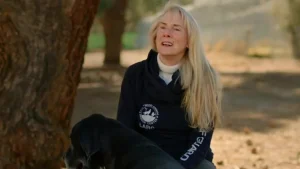
Dr. Lorin Lindner founded it after a lifetime of working with both veterans and animals. Stan McDonald, a Navy Seabees veteran she met while he was in rehab, helped her build the rescue in 2009 and has run it with her ever since. He says the animals help keep him sober.
Become a One Good Story Insider
Get the inside scoop and be the first to know when we add new films and content!
Almost there. Check your inbox to confirm your subscription.