TL;DR
Days before turning 27, Iman Aghay nearly bled to death in a hospital bed and promised himself that a second chance would not be wasted. He moved from Iran to Canada with no job and no contacts, built a business community from nothing, and now teaches entrepreneurs, aiming to reach 100 million lives by helping 10,000 experts help 10,000 people each.
Story Summary
Ten days before his 27th birthday, Iman Aghay was on his deathbed. He had lost 60 percent of his blood to internal bleeding (too much for surgeons to risk an operation), so doctors gave him transfusions and told him, honestly, that they would see if he was still there tomorrow. Lying in that bed, he started thinking about his own funeral and how people would remember him. What he realized was hard to face. He was alive, but he had never really lived. That night he made himself a promise. If he got a second chance, he would live his passion every day, and he would make a difference in the lives of 100 million people before he died. The bleeding stopped on its own. He left the hospital the night before his birthday, calling it a golden ticket to the rest of his life.
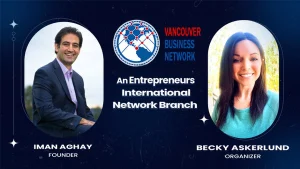
Living in Iran with a passport that made travel difficult, he decided to move to North America to learn English and pursue his dream of speaking on international stages. He landed in Canada in 2009, right after the recession, with no job and no one he knew, and months of applications did not bring back a single interview. The turnaround came from a change in thinking he sums up bluntly. If you don't give it to me, I'll build it myself. The same day he started a web design company with nothing but a laptop, he also created a Meetup group called the Vancouver Business Network, so instead of being a new immigrant with no work samples, he was a community founder who happened to build websites. Three days later his first client paid him $1,800, which bought food and covered the month's rent.
The film follows what that second chance became. A life spent teaching entrepreneurs. Iman's rules are simple (make money today instead of planning forever, serve your customers with excellence, and build systems so you can grow), and his definition of coaching is asking the right questions so people find the answers within themselves. The people around him describe a mentor who is the same person on stage and off, and who measures his mission in ripples, helping 10,000 experts who each have the heart and skills to help 10,000 more. That, he figures, is how you reach 100 million lives.
Transcript
I found myself on my deathbed, literally. I started thinking about my funeral. And I realized I actually never lived a life that brings that passion to reality. And this was 10 days before my 27th birthday. I was like, wait a second. If you get a second chance to life, I'm going to live my passion. I'm going to live my purpose. I was living in Iran and with an Iranian passport, it's very hard to travel to a lot of countries. And I was like, okay, I really need to get myself to a place to be able to have a different passport and learn English so I can become an international professional public speaker. Decided to move to North America. I moved to Canada. This is right after 2008 recession. In 2009, suddenly uh I found myself being here in North America, no job, no family, no friends. Well, let's go get the job. And I couldn't even land an interview. I was dropping off my resume and applying online and everything I could. And not a single person got back to me. And and why would I think like somebody is going to get back to me? And I really resonate with that myself being an immigrant not from Iran but from Australia but coming here with nothing. And that morning I woke up and I realized that I have been insane. You know the definition of insanity is doing the same thing over and over and expecting a different result. But at that point I realized that either I'm going to do it or I'm going to be homeless. this mindset shift happened for me that was like if you don't give it to me I'll build it myself that day I decided to start a web design company which required zero money down I just required a laptop I didn't know anything about web design I have MBA in online business so I knew like how online marketing works the very same day I started a group called Vancouver business network I said instead of being a new immigrant who can't speak English who doesn't have any samples of jobs I'm going to position myself as the founder of Vancouver Business Network who just so happens to be a new immigrant and I created a Meetup group called Vancouver Business Network and suddenly ta I was the founder of Vancouver Business Network who just so happened to have a web design company. So at that point he decided I'll build my own community and it's been no looking back ever since. I got lucky 3 days later found the first client who paid me $1,800 and that money bought us food and paid for the rent of the month. And I remember I was working from 9:00 a.m. to 5:00 p.m. meeting people oneonone to sell websites. And then at 5:00 p.m. I would go to a networking event till 9:00 p.m. And I would network with people who find people to sell websites to. And at 9:00 p.m. I would go home and eat dinner and start learning web design till 3:00 a.m. Would wake up again the next day and I would go to network 9:00 a.m. to 5:00 p.m. to start websites. And that's how I built my web design company. I just love how he has built everything and the community that he has around him. It's very inspiring. And one morning I woke up and I realized that I'm bleeding internally and I was rushed to the hospital where doctors realized that I lost 60% of my blood. If you lose 25% of your blood, you're at a massive risk of getting a deadly heart attack. And I had already lost 60% of my blood. The doctor came to the room and they said normally we need to open you up at this stage uh to stop the bleeding except that you don't have enough blood for us to open you up. So all we can do is give you blood transfusion and see if the blood that we are giving you is faster than the blood that you're losing. And if by any chance you're still here tomorrow then we'll consider doing a surgery or something else depending on the situation. So they connected me to the blood transfusion and I found myself on my deathbed thinking about my funeral. You're going to have people come to your funeral. How are they going to remember you? I realized at that point that I had a much bigger calling and I wasn't making the impact I was supposed to make in people's lives. I wasn't changing people's lives. I wasn't doing anything that I actually was passionate about. I was not following the dream to that point. I realized literally to that point I was alive but I never lived. I never lived through to my heart. I never lived through to my passion. I never lived through to things that I wanted to see. I have an interesting passion. I like to see this light like the aha moment light in people's eyes when they get this aha moment that you know that they're going to go change their lives. He hugs hearttoheart. He's very heart-c centered. And I knew that my passion is to see this every single day, to experience seeing this in people's face, that I experience this every single day of my life. I was like, wait, if you get a second chance to life, what are you going to do? And I realized if I'm given a second chance, I'm going to live my passion. I'm going to live my purpose every single day. And at that point, I didn't know what it's going to be. I didn't know how I'm going to do it. I just knew that I should do it. And that night, I decided that I'm going to make a difference in the lives of 100 million people before I die. I still didn't know how, but I knew that that's what I have to do. I knew that that's my calling. And I got lucky. My bleeding stopped out of his own. And 10 days later, the night before my 27th birthday, they released me from the hospital. It was like a golden ticket to the rest of my life. When I got out of hospital, I knew that I have to follow that passion, right? But I didn't have a path. Like I didn't know and like what are the things that I should do? And that I made that actually my first step. The first step for me was finding the path like what are the things what are the skills that I'm lacking? What are the things that I need to learn to uh to be able to do that? He's made changes along the way and and I think found himself along the way. He's built several communities, become the expert in several areas, but mainly about entrepreneurship because that's his background is being an entrepreneur. And I got started on that journey. And ever since every single day of my life, I dedicated my life to making that difference in people's lives. I dedicated my life in building skills, learning skills, and teaching skills that help people to make a difference in other people's lives. I started organizing events and having guest speakers and slowly showing up at other people's events and speaking at those events. He brings amazing people into our community. The like the speakers and the people who he works with are amazing. Really high integrity people, people with a lot of heart, people who are brilliant at what they do. Aman cares enough about the people he works with and the people who work for him that he takes great pains to pay attention to all the little details because he's concerned for the experience that is being created for the people who attend the event. He's always so full of creative ideas and he knows what we all go through. He knows the struggles that we all face cuz he's been there, done that. and he's amazing at being able to immediately diagnose where a problem might reside in your business. He's hands-on. He's attentive. He cares about everybody in the room. Giving, always strategizing, always staying present. Iman just exudes a sense of love and compassion and empathy and support. It's it's just who he is. His belief is that together we rise. And today I get to see that light in people's eyes every single day on the aha moment of things they learn about themselves and the things that they can do and the way that it changes our lives. And he is one of a handful that truly authentically shows up on stage and offstage as the same person. He ensures that you have what you need to step into your greatness. He attracts heart-c centered people who really lead with compassion and caring. Being able to connect with his story and seeing how far he's come and the difference that he's made me think that for me that that's it's also possible. I think Aman has definitely been part of that leading charge of this is what coaching should be like. every client is now able to reach more people in the world with their message. That's a big part of Iman's heart is knowing it's not just about the clients that he has, but it's all the people they can help in the world. So that's the ripple effect that not only is he creating, but he's creating that mentality. I know I can help 10,000 experts who have the skills, the ability, and the heart to help 10,000 other people. A coach is actually a person that can ask people the right question to enable them to find the answers from within. It's his heart that shines through and the moment you meet them, you know that. I would say that in our industry entrepreneurs kind of fall into one of three categories and one of those categories is can you do this for me? Then there's this group who's a bit more advanced who are like yeah I'll do it for you but you're going to have to pay me. Then I think there's this group that is probably the smallest that Iman fits into. That is that group that just wants to give. They're about what can I do to support you because they understand the value and importance of relationship. And I think that if we really do that as an industry, there's been such a shift where marketing has really diminished from the the value that experts can provide because there's people that are really good at marketing that are not focused on the transformation where Aman really focuses on what is the transformation that we can provide and as long as we focus on that transformation, the money will follow. And in the long game, the relationships are much more rewarding than going after the fast dollar. And the one thing was taking action every single day. Instead of always being in the planning mode, I always created things and brought them to market and got feedback and learned from the feedback and went back again and improved them and brought back into the market over and over and over. Eyes open, paid attention to people's needs and adjusted the programs to serve them with excellence. He thinks how can I create a system that can support a thousand or a 100,000 users. He really cares about the customers getting what they came for. He is just so willing to get in there in the trenches and just be like how can we make this even better? We have this thing called entrepreneurship rules. First three are these. The number one mistake an entrepreneur can make is not making money today. I see that a lot with entrepreneurs that they decide to start a business and they're at the stage of ready ready ready and then they never aim they never fire right and and their business never starts like just are in this optimum perfectionism and and they never launch right but that gets followed by the second entrepreneurship rule which is to serve your customers with excellence. So yes, you should make money today, but when that customer comes on board, you need to serve them with excellence. And that's your number one responsibility. And if you follow rule number one, you have to follow rule number two. And yes, that's challenging. And yet that is what makes you amazing. That is what creates the most amazing company ever. And rule number three is your number one job as an entrepreneur is to create systems or bring systems to your business. So as you're generating income and you're serving customers with excellence, you bring systems to your business. So then you can serve the customers systematically and so you can hire team members who can serve these customers. So you can expand and you can leverage and you can grow and your job is to make sure that these systems exist. Now either you're a systems person like me and you create them or you hire a mentor who brings the systems for you to your business. That's the importance of having mentors in life. That's why I always had mentors in my life because we look at things that we are lacking and we work with the mentors like well take our hand and walk us every step of the way and bring this system to our business and that's how we grew. As a result of that ended up creating a lot of programs that would help people to step to their greatness to gain confidence to start taking action to find their life purpose as well as all different type of programs on marketing and software. He's invested in over 160 companies, had many exits out of companies. All the investments I've done in any company, any business, anything that I've done has been in the service of that passion and of that life purpose. Has a rare blend of genius, like really genius and heart. And I think one of the things you don't find in a lot of people who are that brilliant and innovative is that they can actually also relate to people. He only teaches what actually works. What I love about Aman is he's constantly testing, trying new things, but then he's teaching the result, like the things that actually work. If I could describe Aman in one word, I would say brilliant, heartfelt, expansive, true love, authenticity, integrity, big heart. He leads from the heart, humble, generosity, lead by example, wisdom, leadership. I'm very lucky to be in a place that I experience that love, that transformation. I have that honor of seeing the growth of all these amazing people that are changing their lives and I get to witness that. And um yeah.