
Articles & Guides
Can you adopt wolfdogs?
TL;DR
In most U.S. states it is still legal to adopt a wolfdog, but about a dozen states and many cities ban or restrict ownership, and there are no rabies vaccines licensed for wolf hybrids. Most sanctuaries that rescue wolfdogs, including the one in our film, refuse to adopt them out, because of the near impossibility for wolfdogs to adapt to a human society. The better question is not whether you are allowed to adopt one, but whether you should.
Is it legal to adopt a wolfdog?
It depends on where you live. Roughly a dozen states and the District of Columbia ban wolfdog ownership outright, others require permits, and city or county rules are often stricter than the state’s. One rule applies everywhere. No rabies vaccine is licensed for wolves or wolf hybrids, which means a wolfdog that bites someone can be treated as an unvaccinated wild animal, regardless of what its paperwork may say.
Why do sanctuaries say no to wolfdog adoption?
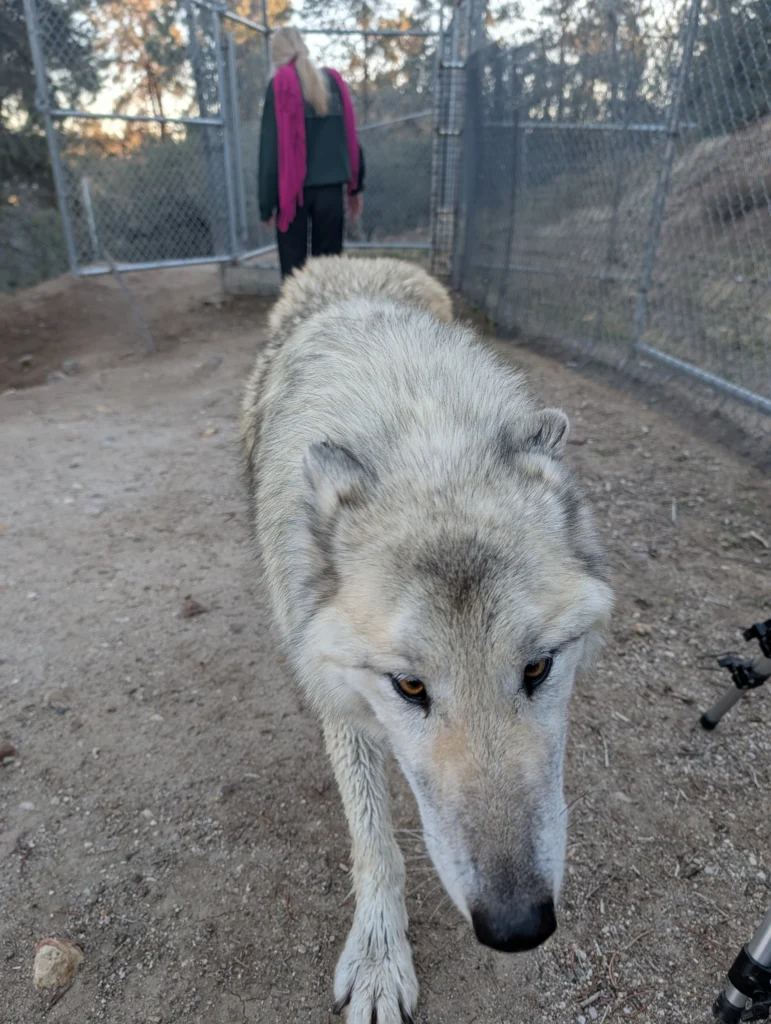
Because they meet the animals after the adoption goes wrong. The Lockwood Animal Rescue Center in the mountains of California does not adopt out its wolfdogs at all. Nearly every animal there was originally bred and sold as a pet, then given up when it grew into something it’s keeper could not manage. Our film Can Wolfdogs Help Veterans Heal? shows what that looks like up close, with enclosures that allow the animals to roam as they were never going to fit in a house. Some rescues do adopt out lower-content animals, with requirements like eight-foot dig-proof fencing, no small children, and wolfdog experience.
What happens to wolfdogs that people give up?
The lucky ones reach a sanctuary and live out their lives in a pack. Sanctuary space is scarce, though, and the docu-series Wolves and Warriors, filmed at the same sanctuary as our film, follows rescue after rescue of animals with nowhere else to go. The ones that do not find a place are often euthanized, because a wolfdog cannot be released to the wild and cannot be rehomed like a dog.
How can you help wolfdogs without adopting one?
Support the places that take them in, because sanctuaries run on donations, and the pairing in our film goes further, at Lockwood, veterans work as the animals’ caretakers, and the healing happens for both the animal and the veteran. It’s a story that belongs to our Nature & Healing hub as much as to Wildlife & Biodiversity. Finally some way you can help are by watching, sharing, and giving all help raise awareness and keep a rescued animal fed.
Frequently Asked Questions
Are wolfdogs legal to own in the United States?
Wolfdogs are legal in some states and banned in others. About a dozen states and the District of Columbia prohibit ownership, others require permits, and local ordinances are often stricter than state law, according to the legal-reference site LegalClarity's state-by-state summary. Always check city and county rules as well as your state's.
Do wolfdog sanctuaries adopt animals out?
Most wolfdog sanctuaries do not adopt animals out. The Lockwood Animal Rescue Center, featured in the One Good Story Project film "Can Wolfdogs Help Veterans Heal?", keeps every rescue for life, because the animals it receives were already failed by home ownership once. Rescues that do adopt out typically require specialized fencing, wolfdog experience, and homes without small children.
Is there a rabies vaccine for wolfdogs?
No rabies vaccine is licensed for wolves or wolf-dog hybrids in the United States. Standard canine vaccines are approved only for domestic dogs. That legal gap means a wolfdog involved in a bite can be treated as an unvaccinated wild animal regardless of its health history.
What happens to wolfdogs that owners give up?
Surrendered wolfdogs either reach a sanctuary or, in many cases, are euthanized. They cannot be released to the wild and rarely qualify for rehoming like a dog. The docu-series "Wolves and Warriors" follows the Lockwood Animal Rescue Center taking in exactly these animals.