
Articles & Guides
What Does a Second Chance at Life Actually Teach You?
TL;DR
People who nearly die keep reporting the same lessons. Being alive is not the same as living, waiting to feel ready is just fear, and a promise only lasts if it becomes a daily practice. Iman Aghay learned all three on his deathbed at 26 and spent fifteen years living them out. His story is in our free fifteen-minute film A Second Chance at Life.
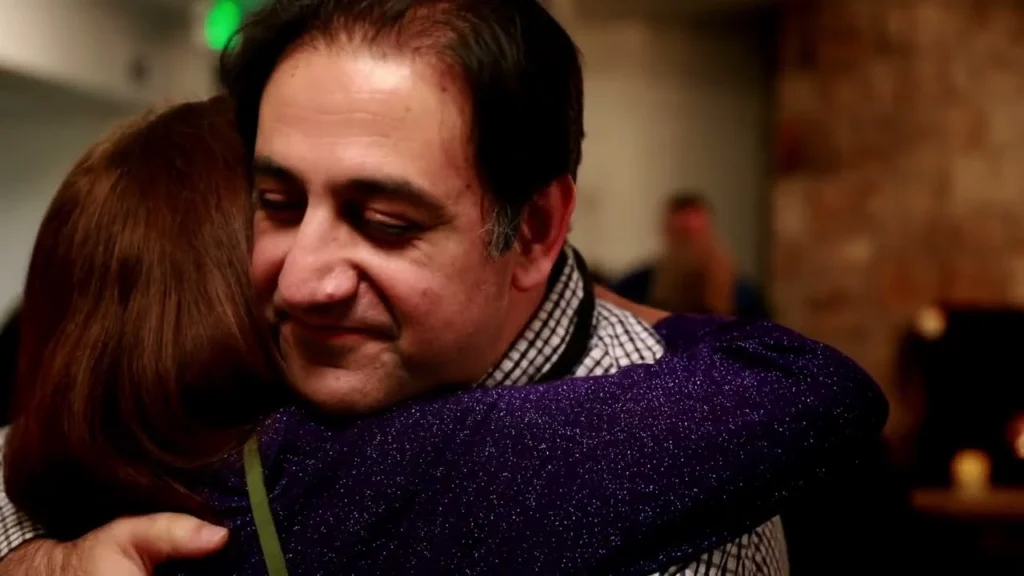
What does almost dying actually teach you?
The people who have lived it tend to give the same answer. Being alive and really living are two different things, and most of us only notice the gap when time runs short. Ten days before his 27th birthday, Iman Aghay was losing blood faster than surgeons could safely operate. Doctors told him plainly that they would see if he was still there tomorrow. Our film follows what he learned in that bed and what he did with it for the next fifteen years.
Why does imagining your own funeral change things?
Because it swaps the question you usually ask, which day to day is whether we are doing okay. Lying in that hospital bed, Iman asked how the people at his funeral would remember him, and the honest answer was hard to face. He had been alive without really living. That question works on anyone, at any age, with no hospital required. Measure a day against what you would want said about you, and the trivial things lose their grip.
What is the first lesson of a second chance?
Start before you feel ready, because ready was never coming anyway. Iman left Iran for Canada in 2009 with limited English and a dream that sounded unreasonable out loud. Months of asking for opportunities went nowhere, so he stopped asking and started building something of his own. For Iman, the lesson was never only about a career, and a second chance made waiting for permission impossible to ignore.
Does the story you tell about yourself really matter?
In the film, Iman describes how the same man got two completely different receptions. Introduced one way, he was a newcomer nobody called back. Introduced as the founder of something he had built, doors opened. Nothing about him had changed except the story he led with. Most of us underestimate how much of our ceiling is a sentence we keep repeating about ourselves.
How do you keep a second chance from wearing off?
You turn the promise into something you do on ordinary days, because the feeling fades and habits do not. Iman made his deathbed promise specific, to live his passion every day and to make a difference for 100 million people. The number sounds impossible until you hear how he carries it. He helps people who help people, so the good he does keeps traveling after it leaves his hands.
Four lessons from A Second Chance at Life work on an ordinary day. Alive is not the same as living, so notice which parts of your day you would defend at your own funeral. Start before you feel ready, and do the small version of the dream this week instead of waiting. Watch the story you lead with, and introduce yourself by what you are building, not what you are missing. Make the promise a practice by picking one daily act that serves someone beyond yourself.
Where can I hear the full story?
The film runs about fifteen minutes and is free to watch. His changemaker page gathers the rest, including a long conversation on the Smart Business Revolution podcast and his chapter in The Game Changer Vol. 8.
Frequently Asked Questions
Do near-death experiences really change people?
Research on people who survive close calls with death reports lasting shifts, clearer priorities, less fear of failure, and more urgency about what matters. Psychology Today has covered this pattern in survivors. Iman Aghay is a fifteen-year example of the shift holding.
Who is Iman Aghay?
An Iranian born entrepreneur who nearly died of internal bleeding at 26, he moved to Canada in 2009 and founded the Vancouver Business Network. His goal is to make a difference in the lives of 100 million people. Our film A Second Chance at Life tells his story.
What is the Vancouver Business Network?
A business community Iman Aghay founded in Vancouver after months of job applications went nowhere. He started it the same day as his web design company, and it became the platform that opened doors his resume could not.
How do you apply second-chance thinking without a crisis?
Use the funeral question without the hospital. Ask how you would want the people closest to you to describe how you spent this season of your life, then look at an ordinary week and see whether it matches. Iman Aghay needed a deathbed to ask it, and now you can learn from his experience and use it also.