Articles & Guides
How can schools help kids feel like they matter?
TL;DR
The CDC says kids feel they matter at school when adults and peers in school care about them as individuals and about their learning. In 2021, 22.0 percent of US high school students who felt connected to others at school reported poor mental health, against 40.1 percent of those who did not. Blue Ribbons Worldwide teaches students to honor each other in 60 seconds or less.
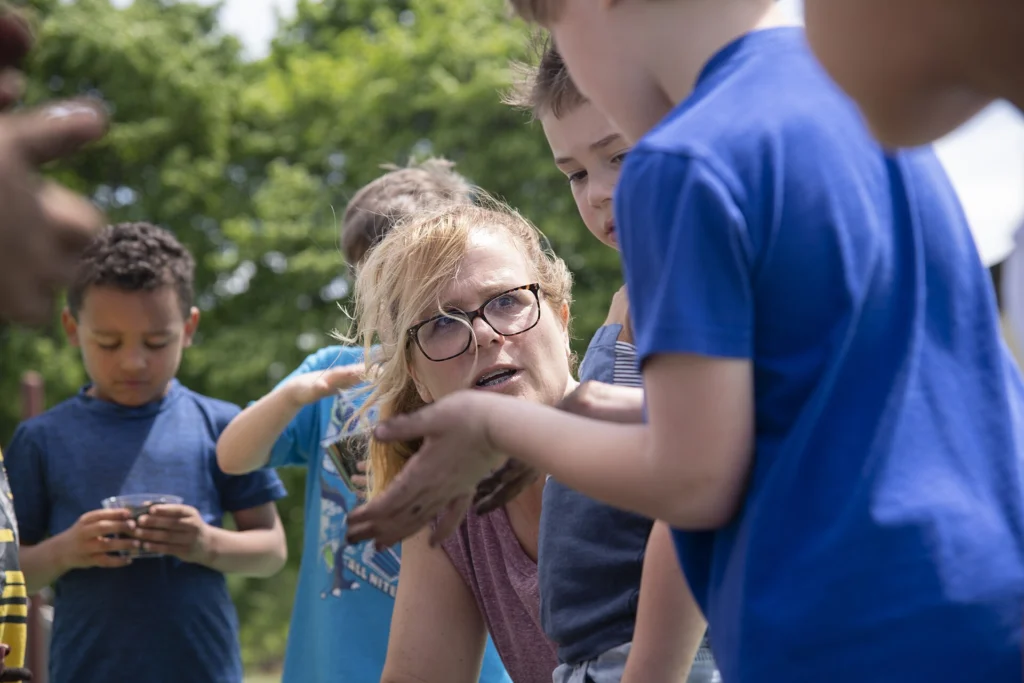
The CDC has a name for children feeling cared for and valued at school. It’s called school connectedness, and it means students feel “that adults and peers in school care about the students as individuals and about their learning.”
What does the CDC say changes when kids feel connected at school?
In 2021, 61.5 percent of US high school students told the CDC’s Youth Risk Behavior Survey that they felt connected to others at school. That leaves close to four in ten who did not.
Among students who felt connected, 22.0 percent reported poor mental health, against 40.1 percent of students who did not feel connected, according to the CDC’s report on the 2021 survey.
The CDC says connected students are also less likely to face substance use and violence. They are more likely to have higher grades and test scores, have better school attendance, and graduate high school.
How does Grandma Sparky’s blue ribbon ceremony help a school?
Helice “Grandma Sparky” Bridges created a ceremony that takes about a minute. You tell someone exactly how they make a difference, place a blue ribbon reading “Who I Am Makes a Difference” above their heart, and hand them two more ribbons to pass on.
In our film about Grandma Sparky, she explains why she took it to teenagers. She wanted to give them “the opportunity to honor people,” so that kids would grow up in a way “they were not bullied, they were not blamed and shamed.”
Blue Ribbons Worldwide now runs programs for elementary, middle and high school students that teach them to honor each other in 60 seconds or less. In the film, Sparky describes what students start saying to each other, from “I didn’t know that I mattered like that” to “I thought you didn’t like me.”
What happens when students honor their teachers?
Sparky says the ceremony reaches the adults in the room as well. When kids honor their teachers, she says in the film, the teachers answer, “Oh, finally I think I can make a difference.”
That lines up with the CDC’s definition, which names both adults and peers. In a ribbon ceremony, students honor each other and their teachers.
What does the Blue Ribbon School Training include?
For middle and high schools, Blue Ribbons Worldwide offers a 7-week online course called the Making Dreams Come True Blue Ribbon School Training. It brings students, teachers, administrators and support staff together over 7 weekly Zoom calls, and the group customizes each course for the school.
The package includes 7 curriculum PDFs, 10 “Who I Am Makes A Difference” ribbons and a card for the 7-step acknowledgment ceremony, according to the group’s Get Involved page.
Anyone ages 10 to 80 can take Standing Strong Together, a separate 6-week course that ends with Blue Ribbon Ambassador certification. One student ambassador from Carlsbad, California, is quoted on the group’s site saying she is bringing the project “to every school in our district.”
Blue Ribbons Worldwide says more than 50 million people have been impacted by the ribbon, that it has been translated into 12 languages, and that it has received more than 15,000 Blue Ribbon stories. Those figures are the group’s own counts.
How can a parent or teacher start with Blue Ribbons this week?
Blue Ribbons Worldwide will send 10 free ribbons, and the package comes with its 7-step ceremony card. The group asks you to give each person you honor 2 more ribbons, so they can pay it forward.
The ribbon story published in Chicken Soup for the Soul began with a class. A teacher in New York honored each of her high school seniors and gave each student 3 more ribbons to spread the ceremony. Sparky is the author, and you can find the book on our Chicken Soup for the Soul page. What happens when you tell someone they matter? covers where the ribbon came from.
Sparky collected more of these stories in her 1997 book, Who I Am Makes a Difference. Jack Canfield, who handed out hundreds of her ribbons at his seminars, has his own page on the site. Young people who want to start something of their own will find stories of others who have in our Young Changemakers guide.
Frequently Asked Questions
What is school connectedness?
The CDC uses the term for students feeling that adults and peers in school care about them as individuals and about their learning. It includes a sense of being cared for, valued and supported, and belonging at school.
How many high school students feel connected to their school?
In the CDC's 2021 Youth Risk Behavior Survey, 61.5 percent of US high school students said they felt connected to others at school.
Does Blue Ribbons Worldwide work with schools?
Yes. Blue Ribbons Worldwide runs programs for elementary, middle and high school students, and offers a 7-week online Blue Ribbon School Training for middle and high schools.
How can a teacher get free blue ribbons for a class?
Blue Ribbons Worldwide offers 10 free "Who I Am Makes A Difference" ribbons on its website, with a card for its 7-step ceremony.