
Articles & Guides
How do you restore a redwood forest?
TL;DR
Restoring a redwood forest involves thinning crowded young trees, removing old logging roads, rebuilding streams and bringing cultural burning back. Redwoods Rising is doing that across 70,000 acres of Redwood National and State Parks, and in 2026 Save the Redwoods League awarded 125 restored acres on Prairie Creek back to the Yurok Tribe, who opened it to the public as 'O Rew Redwoods Gateway.
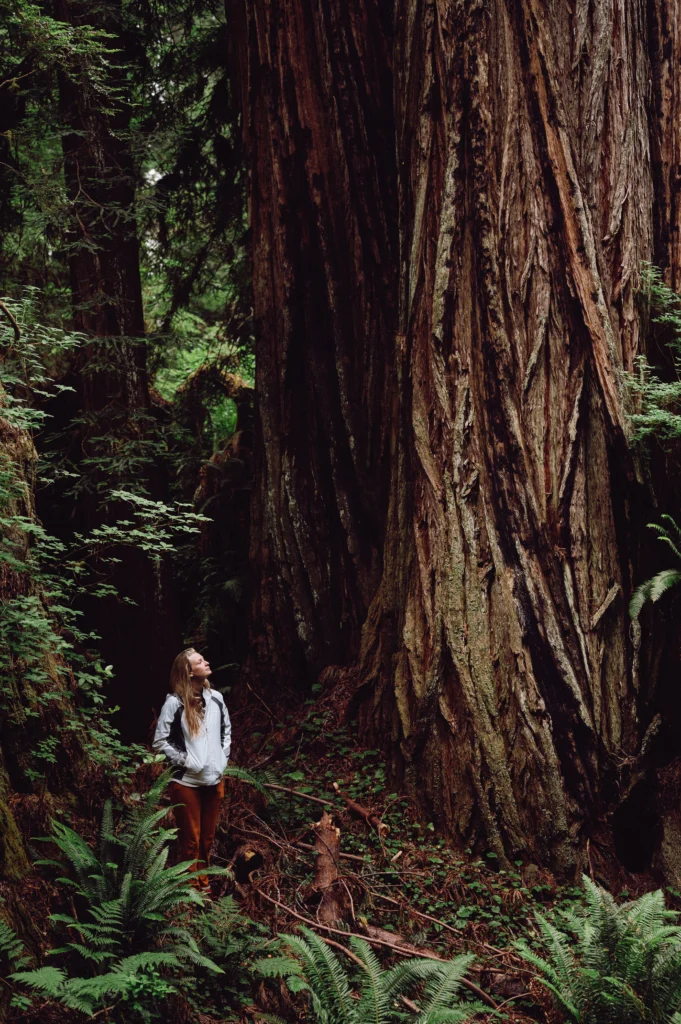
You can’t just plant new Redwoods and wait for the forest to come back. Save the Redwoods League, is a nonprofit that has been protecting these forests since 1918. They say the damage from logging is beyond the point where nature can heal itself in the foreseeable future. So restoration is the best plan to bring these forest back. Crews thin the crowded young trees and invasive trees and plants, remove the old logging roads, rebuild the streams, put mangement with fire back onto the land, and in one case hand the land itself back to the people who originally looked after it.
Estimates are about only about 5 percent of the original ancient coast redwood forest is still standing. Redwood National and State Parks in northern California hold almost half of what is left, and even there the picture is not great. Roughly two-thirds of the parks’ 120,000 acres of redwoods were logged, some of it as recently as the 1990s. The loggers took the big old trees and left behind erosion damaged streams and hundreds of miles of failing roads.
Why can’t a logged forest grow back on its own?
The forest does grow back, just not into a redwood forest. After a clear cut, young trees come up so thick that they compete with each other for light and water and they stay small. Save the Redwoods League puts it simply. By giving trees more space, you help the forest regain its natural strength. The old roads are another issue, because their culverts fail and sediment chokes streams, so fish can’t get through. Making it more of a self failing than self healing ecosystem.
What does Redwoods Rising actually do?
Redwoods Rising is the restoration partnership in Redwood National and State Parks. They started in 2018, and the goal is to rehabilitate more than 70,000 acres of second growth forest over the next thirty years or more and remove 300 miles of abandoned roads. Save the Redwoods League, the National Park Service and California State Parks run it together, and the work is concentrated in two watersheds, Mill Creek and Prairie Creek.
Leonel Arguello helped establish the project. He started at Redwood National and State Parks in 1988 as a seasonal employee and became known as the grass guy for the park because his master’s thesis was on prescribed burning in the Bald Hills grasslands. He went on to run the park’s forest restoration programs and has spent his whole career there. As he mentions in the film, redwood forests are harbors of connected life and his team is working very hard to reconnect them.
Thinning means taking out the crowded young trees so the rest can grow toward old growth conditions. The rest of the work is on roads and water. Redwoods Rising crews repair or remove legacy logging roads and the failing culverts under them, then rebuild natural stream channels and replant native vegetation along the waterways so salmon and trout have somewhere to live.
How do you bring back the life in the canopy?
The top of an old redwood is its own hidden ecosystem, and a young forest doesn’t have one. Steve Sillett and Marie Antoine at Cal Poly Humboldt are two of the people who first climbed into the old growth canopy and found what was up there, and Sillett was doing it in the mid 1990s. Richard Preston tells that story in the book The Wild Trees. What they found included fern mats, which are thick beds of leather-leaf fern and soil growing in the crowns of the largest and oldest trees. Antoine has measured mats the size of cars with soil more than a meter deep. In a study of 235 redwoods across the range, only 34 had ferns and other plants living in their crowns, and the average age of those trees was over 1,100 years.
Since 2021 Sillett and Antoine have been moving fern mats into a younger forest. They collect fern material that winter storms knock to the ground in old growth, grow it until it is about the size of a loaf of bread, climb with it in bags hung from their feet, and tie it into crevices in the crown with hemp cord. So far they have put 60 mats into 11 trees in the van Eck forest near McKinleyville. By early 2024, nearly three years later, many of the ferns were making new fronds and some were already producing spores. Antoine calls it a small effort and says it is satisfying and hopeful work.
What does fire have to do with healthy forest?
Redwoods survive fire, and cultural burning is deliberate, controlled fire set by Yurok people on their own land, and the Cultural Fire Management Council, whose executive director is Margo Robbins, is working to bring that practice back on the Yurok Reservation and Yurok ancestral land. Their stated reasons are a healthier ecosystem for all plants and animals and long term fire protection for the people who live there. The burning also supports traditional Yurok hunting and gathering. In Giants Rising, cultural burning is shown as forest care, and not solely as fire prevention.
What happens when land goes back to its original caretakers?
The the place for an answer is the ‘O Rew forest. It is 125 acres on Prairie Creek near Orick, California, in the heart of Yurok ancestral territory. When Save the Redwoods League bought it in 2013, 20 acres of it were asphalt from a former lumber mill and 80 acres were cattle pasture, and the creek had been reduced to a trench flanked by invasive plants. Starting in 2021, the Yurok Tribe Construction Corporation and the Yurok Fisheries Department built a one mile braided channel, two off channel ponds, 20 acres of wetlands and 20 acres of upland habitat. The Yurok Revegetation Crew planted nearly half a million native seedlings from 50 species, coast redwoods among them. Now hundreds of endangered juvenile coho salmon are already returning to the new habitat.
On 30 June 2026 the League transferred the land to the Yurok Tribe, and it opened to the public on 1 August 2026 as ‘O Rew Redwoods Gateway, with trails that connect with Redwood National and State Parks. Rosie Clayburn Katri, the Yurok Tribal Heritage Preservation Officer, said that when the mill operated there it was a source of conflict for the Yurok people and now it is a point of pride. The Tribe plans to build a cultural center and a traditional village on the site. The Tribe lost more than 90 percent of its land in the mid 1800s, so 125 acres is a small but important piece of that coming back.
How can you help?
Giants Rising are asking people for two things, help grow back 70,000 acres and restore cultural connections. The first runs through Save the Redwoods League and Redwoods Rising, which take donations and run an apprenticeship program. The second is the Yurok Tribe’s cultural center, which the Tribe is raising funds to build. And if you are anywhere near the north coast of California, ‘O Rew Redwoods Gateway is open, so now you can go and see it for yourself!
Frequently Asked Questions
How much of the original redwood forest is left?
Save the Redwoods League says only about 5 percent of the original ancient coast redwood forest is still standing, and that Redwood National and State Parks hold almost half of it. Even inside the parks, roughly two-thirds of the 120,000 acres of redwoods were logged, some as recently as the 1990s.
What is Redwoods Rising?
Redwoods Rising is a partnership between Save the Redwoods League, the National Park Service and California State Parks that started in 2018. Its goal over the next thirty years or more is to rehabilitate more than 70,000 acres of second growth forest in Redwood National and State Parks and remove 300 miles of failing logging roads. The work on the ground is thinning crowded young trees and repairing or removing old roads and culverts, plus rebuilding the streams the roads damaged.
Why do restorers thin young redwood trees instead of leaving them alone?
After logging, young trees come up so crowded that they compete for light and water and stay small. Save the Redwoods League thins some of them out so the rest have room to grow toward old growth conditions, which it describes as giving trees more space so the forest can regain its natural strength.
What is ‘O Rew Redwoods Gateway?
'O Rew Redwoods Gateway is 125 acres on Prairie Creek near Orick, California, that Save the Redwoods League bought in 2013, restored with the Yurok Tribe from 2021, and transferred back to the Tribe on 30 June 2026. It opened to the public on 1 August 2026 with trails that connect with Redwood National and State Parks, and the Tribe plans to build a cultural center and a traditional village there.
Can anyone visit a restored redwood forest?
Yes. 'O Rew Redwoods Gateway has been open to the public since 1 August 2026, and Redwood National and State Parks, where Redwoods Rising works, are open too. The film Giants Rising also lists redwood parks to visit on its own site.