
Articles & Guides
How does having a mentor change a kid’s life?
TL;DR
A mentor changes a kid’s life mostly by lasting. Research points to a twelve-month minimum, weekly contact, and at least two hours of training before the first meeting, and matches that end early can erase the benefit. Our film about Helice “Grandma Sparky” Bridges shows the same message compressed into a single minute.
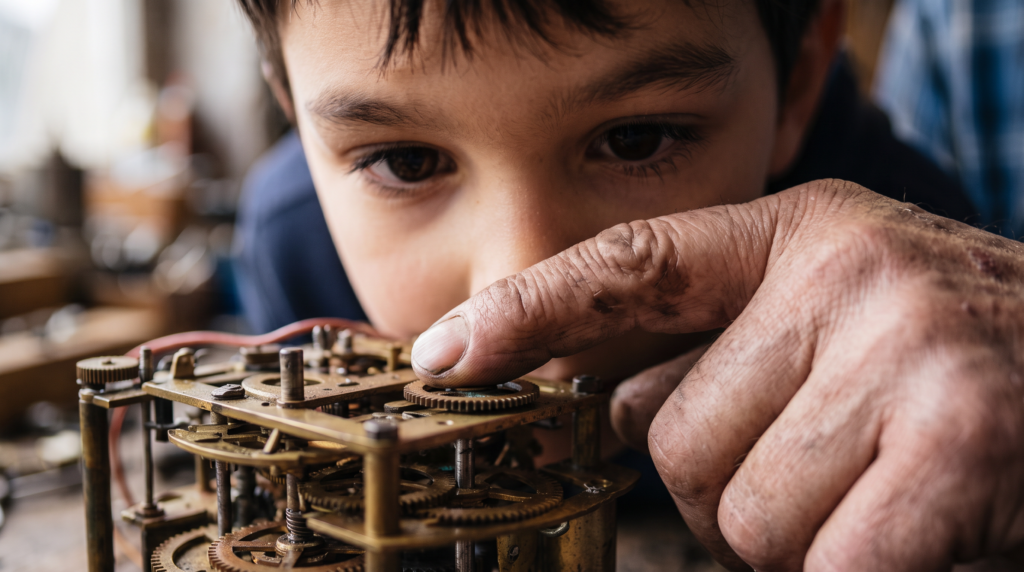
What does a mentor actually do that changes a kid’s life?
They keep showing up after the novelty wears off. The research on youth mentoring is less about inspiration than about duration. Youth.gov, the federal government’s youth programs resource, reports that mentors are asked to commit to at least twelve months, and that matches ending early can wipe out the benefit entirely. A relationship that stops after three months can leave a kid worse off than no match at all. Our Youth Mentorship guide collects the films, people and organizations working on this.
How long does a mentoring relationship need to last?
A year is the working minimum, and weekly contact is the standard MENTOR, the national mentoring organization, recommends. Programs are advised to check in with the pair twice in the first month and monthly after that, because the drop-off usually happens without any announcement. The mentor gets busy, two weeks pass, then a month, and the kid draws the conclusion adults have taught them before.
Does training actually matter for mentors?
More than most volunteers expect, and Big Brothers Big Sisters research found that mentors who received less than two hours of preparation felt less close to their mentee, spent less time with them, and were less likely to continue into a second year than mentors who got two hours or more. Two hours is the difference between a relationship that survives and one that fades.
What does it look like when it works?
It looks unremarkable from outside. Someone turns up on the same afternoon every week and treats the kid as though their opinion counts. In our film about Helice “Grandma Sparky” Bridges, that idea is compressed into a single minute, telling a young person exactly why they matter and handing them something to pass on. Sparky built it after leaving an abusive marriage at 37 and asking what happens to people who never get told they matter, and the organization she founded, Blue Ribbons Worldwide, now teaches schoolchildren to do it for each other. Jack Canfield handed those ribbons out at his seminars and they reached 35,000 people within three months.
A 1-minute ceremony is not a mentoring relationship. It is the same message delivered in miniature, which is why the two work well together. If that side interests you more, we wrote about it in how young people make a difference in their community, and the Young Changemakers guide has more.
What stops people from mentoring?
The belief that they need to be qualified, though the evidence points the other way, at showing up predictably, listening, and staying past the first hard patch. Formal programs handle screening, matching and support, which is what turns goodwill into something that lasts. Youth.gov is blunt that good intentions and willing volunteers are not enough without that structure behind them. Treger Strasberg tells her own version of starting before she felt ready on the 1 Girl Revolution podcast.
How do you start?
Pick a program with real infrastructure and commit to a year, not a season. Ask what training they give before the first meeting, and treat two hours as the floor. Then put the weekly slot in your calendar the way you would a job, because from the kid’s side that is exactly what it is.
Frequently Asked Questions
Do kids with mentors do better in school?
Yes. Mentored students turn in higher-quality work and attend more consistently, and they are more likely to go on to college, with 76 percent of at-risk youth with a mentor aspire to enroll in and graduate from college versus 56 percent without one, per MENTOR's report The Mentoring Effect.
How many kids grow up without a mentor?
More than one in three young people grow up without a mentor of any kind, and MENTOR's national studies show the mentored share falling from 66 percent in 2013 to 60 percent in 2022.
Does mentoring have long-term effects?
The longest-running data says yes. A thirty-year analysis reported by the Afterschool Alliance found mentored youth earned about 15 percent more between ages 20 and 25 than unmentored peers, with advantages compounding over a career.
What is the blue ribbon ceremony?
The blue ribbon ceremony, created by Helice "Grandma Sparky" Bridges, is a short affirmation in which a ribbon reading "Who I Am Makes a Difference" is pinned above someone's heart while they are told specifically how they matter. The One Good Story Project film about Grandma Sparky shows the ceremony and the movement it started.