
Articles & Guides
What’s the difference between a Wolfdog versus a Wolf versus a Dog?
TL;DR
A wolf is a wild animal, a dog is the domesticated species we bred from wolves over thousands of years, and a wolfdog is a hybrid with both in its recent ancestry. They differ in build, behavior, and, most importantly, the environment they can live in.This difference is why wolfdogs so often wind up in sanctuaries after owners realize they cannot live in a home.
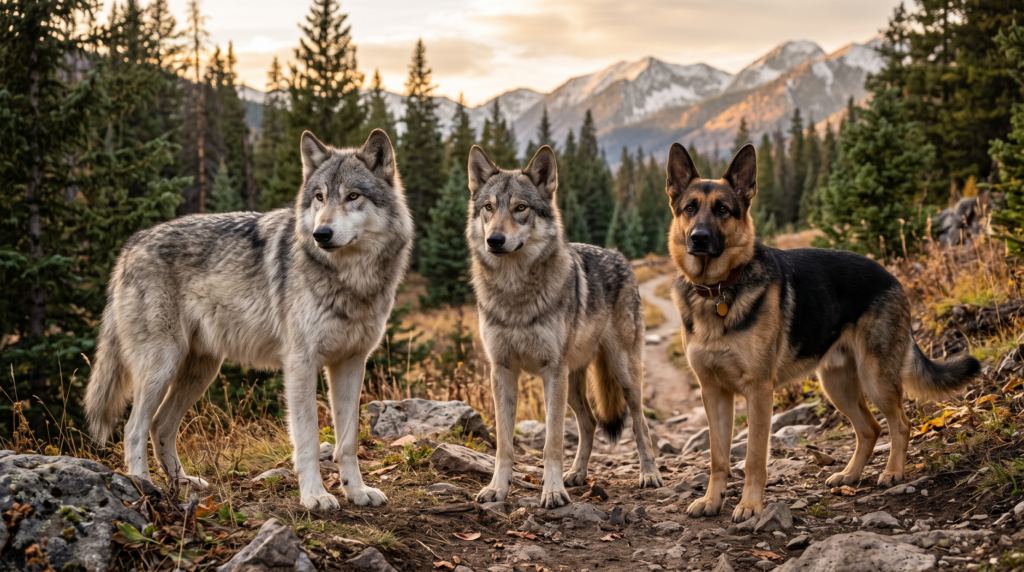
What is a wolfdog?
A wolfdog is a canid with both wolf and domestic dog in its DNA, usually a gray wolf crossed with breeds like the German Shepherd or Siberian Husky. Sanctuaries sort them by wolf content (low, mid, or high) using ancestry, build, and behavior together, because two pups from one litter can land very differently. The animals in our film Can Wolfdogs Help Veterans Heal? span that range.
How are wolves different from dogs?
The core difference is domestication, since a dog wants to work with people, and a wolf does not need people at all. Physically, wolves carry longer legs, larger feet and jaws, pointed ears, and a straight tail. Dogs kept the rounder faces and softer features we selected them for. Behaviorally, a dog will repeat a command game for the reward of pleasing you, a wolf is more solitary and does not seek approval.
How can you tell if an animal is part wolf?
Ancestry paperwork, body traits, and behavior help identafy a dog wolf hybrid. It is not always easy and sometimes even experts get single animals wrong. Claims about “wolf look” alone can be misleading, since plenty of huskies get reported as wolfdogs, and some true high-content animals look surprisingly doglike. The keepers at Lockwood Animal Rescue Center make this call animal by animal.
Why does the difference matter?
A high-content wolfdog cannot be vaccinated for rabies under any licensed protocol, and is banned or restricted in much of the country. Wolfdogs need space and pack structure no ordinary home can provide. You can read more in our article Can you adopt a wolfdog?.
How do wolfdogs, wolves and dogs compare?
A wolf is legal to own almost nowhere without a permit, while a wolfdog’s legal status varies by state and city and is often restricted, and a domestic dog is legal to own. Containment does not apply to a wild wolf, a wolfdog escapes ordinary fencing and needs tall reinforced enclosures, and a dog stays behind standard fencing.
A wolf is wary of humans, a wolfdog bonds hard with its own people and stays wary of strangers, and a domestic dog is broadly social. A released wolf belongs in the wild, but a wolfdog cannot survive there and few sanctuaries take them, while a surrendered dog has rehoming networks. Kept as pets, wolfdogs are frequently surrendered or euthanized, while dogs usually do fine and wolves are not kept at all.
Those differences are why sanctuaries exist at all. The Lockwood Animal Rescue Center in our film takes in animals whose owners could not meet that middle column, and whether you can adopt a wolfdog answers the question people usually ask next.
Frequently Asked Questions
What exactly is a wolfdog?
A wolfdog is a hybrid canid with both wolf and domestic dog in its recent ancestry, most often a gray wolf crossed with a German Shepherd, Husky, or Malamute. Sanctuaries classify wolfdogs as low, mid, or high wolf content using ancestry, physical traits, and behavior together.
How do you tell a wolf from a dog?
Wolves have longer legs, larger feet and jaws, pointed ears, and a straight tail, and they do not seek human approval the way dogs do, and veterinary references like PetMD list the full set of differences. Domestication is the real divide. Dogs evolved to live with people, wolves did not.
Are wolfdogs good pets?
Wolfdogs are extremely difficult pets, and most rescue organizations advise against private ownership. Higher-content animals need specialized containment, cannot receive a licensed rabies vaccine, and are illegal in many places. The film "Can Wolfdogs Help Veterans Heal?" shows where the ones that do not work out as pets end up, which is a sanctuary.