
Our Stories
Home
6:37
TL;DR
Getting a family off the street only works if they stay housed. Humble Design furnishes their empty spaces with care and makes it a home, where the national return-to-homelessness rate hovers near 50%, nearly all of their families are still home a year later.
Key Takeaways
- Close to 9,000 people in San Diego have no home, and most of those experiencing homelessness are moms and kids coming off a very bad year.
- Humble Design started when the founder learned her own friend had spent the night in a shelter with her kids, after a $25 rent hike had cost the family their home and everything they owned.
- Getting housed is not the finish line. Nationally, about half of families return to homelessness within 12 months.
- 98 to 99% of the families Humble Design furnishes are still in that same home a year later.
- A furnished home is the difference between just existing somewhere and actually living there.
Story Summary
Home, the film begins, is a place that's safe, a place you want to come back to every day, a sanctuary from a hectic and sometimes cruel world. In San Diego, close to 9,000 people don't have one.
The film tells the story of Humble Design, which began when its founder learned that her own friend had spent the night in a homeless shelter with her children. A $25 rent hike had cost the family their home, and everything they owned went to the curb. They moved into an empty house with two bags of clothing. Furnishing that house, with love and care, became the model for everything after. The need it answers is specific. Nationally, about half of families return to homelessness within a year of being housed. Among families whose homes Humble Design furnishes, 98 to 99% are still there a year later.
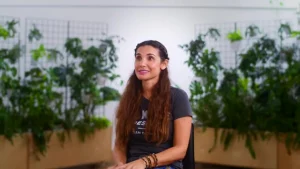
The family at the film's center is Mariah's, a medical assistant, mother of four, in recovery, who found Humble Design through her Alpha Project case manager after years of raising her children in a shelter room. The film ends with her kids excited about rooms of their own, a house that finally has what makes a place worth fighting to keep.
In many ways, this film inspired my decision to create the One Good Story Project.
It was actually shot before the project was even conceived. I was beginning to feel there was something more than just making films and videos that convinced people to buy things they generally didn’t need. I began to think possibly we needed, "I needed," a reset. A way to see the good in the world and inspire others to do the same.
It was during the COVID lockdown. Business was slow, so we decided to take this project on to keep busy.
The thing I love about doing these films is that every time I shoot one, I learn so much about the world and people’s lives, things I, and most of us, never had a clue about.
Now, for my own selfish purposes, I am obsessed with telling these stories of humanity's better angels. Each one we do, I learn a little more and grow just a tiny bit more than before I started on the project. It is my deepest hope these stories inspire you to go do something that makes the world just a little better. Go out and make your own One Good Story!
Join the Project at https://OneGoodStoryProject.com
Learn more about Humble Design at https://www.humbledesign.org/
Find out the story behind this story at https://youtu.be/8mo1rr1AcBQ
Transcript
Related Resources
Organizations

National Alliance to End Homelessness

Humble Design

The Furniture Bank Network
Changemakers
Books
Documentaries

Podcasts

Frequently Asked Questions
What does Humble Design do?
Humble Design furnishes empty homes for families leaving homelessness, with real care for how each family wants their home to feel. The idea is simple. When a house feels like a home, families stay.
How can I donate furniture to a family leaving homelessness?
Contact a furniture bank, not a general charity shop, because they place items directly with families moving out of homelessness. Humble Design covers San Diego, Detroit, Chicago, Cleveland and Seattle, and the Furniture Bank Network lists others across the country. Most will collect from you.
What furniture do families leaving homelessness need most?
Beds, a table and chairs, and kitchen equipment, along with linens and towels. These are the things that decide whether a family can sleep, eat together and cook at home instead of buying food out.
Which 1 Girl Revolution episode features Treger Strasberg?
Episode 61, a full conversation about founding Humble Design.
Who founded Humble Design?
Treger Strasberg, after she furnished a friend’s empty house and saw what it changed.
Where does Humble Design operate?
Humble Design works in four cities, Detroit, Chicago, Cleveland and San Diego. It began in Detroit in 2009 and has designed more than 4,609 homes.
Where can I hear Treger Strasberg tell her story?
Episode 61 of the 1 Girl Revolution podcast and episode 75 of ChangeMakers with Katie Goar are both long conversations with her.
Where is Treger Strasberg based?
Treger Strasberg is based in Detroit, Michigan, where she founded Humble Design in 2009. She has led its growth to four cities, Detroit, Chicago, Cleveland and San Diego.
Who is Treger Strasberg?
The founder and CEO of Humble Design, the Detroit nonprofit that furnishes homes for families leaving homelessness. She started by furnishing one friend’s empty house.
How can I help a family leaving homelessness?
Furniture and household donations to furnishing nonprofits are among the most direct ways to help, because an empty apartment is one of the main risks to a family's fresh start. Organizations like Humble Design, featured in the film "Home", turn donated furnishings into move-in days for families leaving shelters.
How many people are homeless in the United States?
About 770,000 people were homeless on a single night in the 2024 federal count, up 18 percent in one year and including roughly 150,000 children, per HUD's Annual Homelessness Assessment Report.
What is the difference between homeless and unhoused?
Federal rules use the word homeless, and they define it in four categories at 24 CFR 578.3. Many people and many organizations prefer unhoused. Our own recommendation Lead Me Home describes people living unhoused in cities across the West Coast. The word changes, the federal definition does not.
Is homelessness in the United States going up or down?
Both, depending on the window. The January 2025 count was a 3% decrease since 2024. Measured against 2013 it is a 27% increase. HUD chose 2013 as its baseline because that is when Housing First policy changes began inside its homelessness programs.
How many people return to homelessness after being housed?
It varies by place and by program. In the period a UC San Diego team studied, 25 percent of San Diegans placed into housing returned to homelessness, while 2.3 percent of families whose homes had been furnished by Humble Design did.
Why do families return to homelessness after being housed?
Nationally, around 50% of families return to homelessness within 12 months of being housed. An empty house is hard to call home. Humble Design exists to close that gap, and 98 to 99% of its families are still in their home a year later.
How did Humble Design start?
The founder learned that her friend Krista and her kids had spent the night in a homeless shelter after a $25 rent increase cost them their home. Everything the family owned went to the curb. Finding and furnishing a home for that one friend became the model for the whole organization, now running 12 years.
How many people are homeless in San Diego?
The film puts it at close to 9,000 people. Most are mothers and children who have had a really bad year and are trying to start over.
Who does homelessness affect?
It could be virtually anyone across all walks of life, and as Humble Design's founder puts it, we are all just one paycheck away. The person sitting across from you could be homeless and you would not know it.