
Articles & Guides
What is cultural burning?
TL;DR
Yurok and Karuk families are putting fire back on the land to bring back hazel, elk and open oak woodland. California outlawed it in 1850 and outlawed broadcast burning again in the 1930s. Senate Bill 310 reopened the door in 2024, and the Karuk Tribe signed the first agreement under it in February 2025.
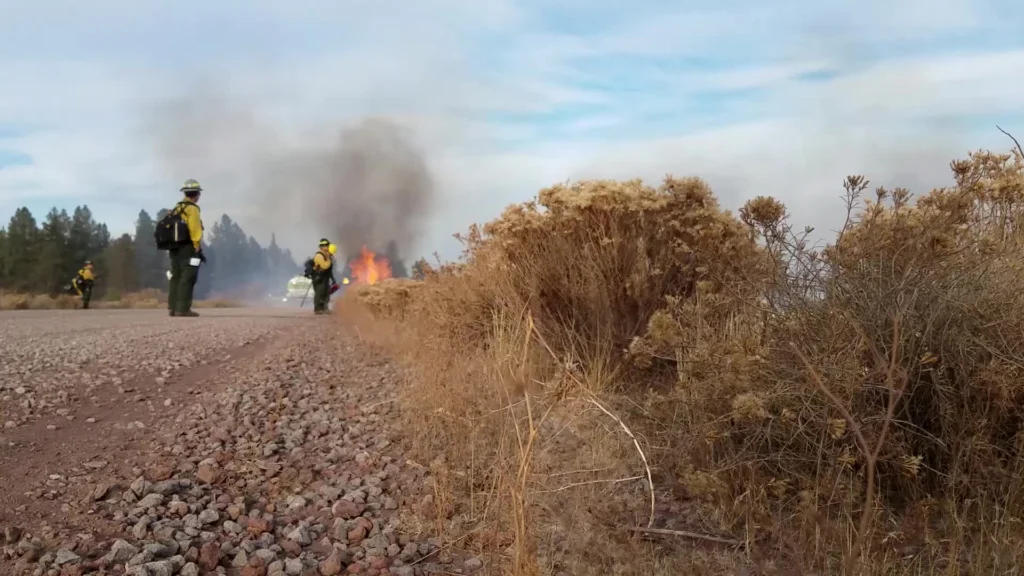
It sounds crazy but it just might be the case that to keep a forest healthy, you might need to set it on fire. Giants Rising follows redwood researchers and Yurok cultural practitioners into the coast redwood forests of California, looking at how these trees survive fire. Margo Robbins is one of the people featured. The film’s own site describes her as using the indigenous practice of controlled burns to help heal and fortify north coast forests. So let’s talk about what she is actually doing and how fire can help a forest thrive.
So what is cultural burning?
It is deliberate fire, set by Indigenous people to help create a healthy forest ecosystem and control overgrowth that could be the source of much larger fires. The Cultural Fire Management Council, a community based non-profit organization at Weitchpec, California, states its mission as facilitating the practice of cultural burning on the Yurok Reservation and Ancestral lands. It expects that to lead to a healthier ecosystem for all plants and animals, long term fire protection for residents, and support for the traditional hunting and gathering activities of Yurok.
Save the Redwoods League connects between modern prescribed fire practices and traditional ancestral burning.
What did fire do in the redwood parks?
The National Park Service states that for thousands of years, Yurok, Tolowa, and Chilula people managed prairies, oak woodlands, and some coastal areas with periodic fire. Those places are now within Redwood National and State Parks, and the fire kept them healthy. That burning provided grazing and hunting areas for elk and deer. It maintained important resources like tanoak trees and various basket weaving materials. It kept trail and travel corridors open. It even lessened the prevalence of parasites like ticks in the prairies.
California made it illegal. Twice.
Save the Redwoods League says California banned cultural burning back in 1850 as part of legislation designed to forcibly remove Indigenous people from their ancestral lands. The National Park Service records a second one. Early European Americans who ranched those same lands continued the practice of broadcast burning until it was outlawed by the state in the 1930s.
Because of these practices, many of the prairies and oak woodlands have become encroached with Douglas fir and other conifers, which the park service says can eventually eliminate these important plant communities. Take fire out of a place that was built around fire and the place evolves into something else.
The importance of a hazel bush.
California hazelnut is one of the plants a Karuk or Yurok weaver needs. Tony Marks-Block, Frank K. Lake, Rebecca Bliege Bird and Lisa M. Curran monitored 48 plots within two prescribed and 19 cultural burn sites for the journal Fire Ecology, and the numbers are not subtle.
One growing season after a burn, hazelnut shrubs produced a 13-fold increase in basketry stems compared with shrubs growing at least three seasons post burn. Plots that had at least three burn events from 1989 to 2019 held 1.86-fold greater hazelnut shrubs than plots with fewer. A weaver gathering at a cultural burn site picked up 4.9 stems a minute. At a site burned by wildfire, 1.6. Where fire had been excluded, 0.5. And weavers traveled 3.8-fold greater distance to reach gathering sites burned by wildfires compared with those that were culturally burned.
The authors conclude that cultural fire regimes with high burn frequencies, three to five years, promote high densities of hazelnut shrubs and increase basketry stem production. Then they note where the plots burned at the highest frequency were. All of them sat on the Yurok Reservation, where land tenure of indigenous people is comparatively stronger.
Who is doing the burning now?
The Cultural Fire Management Council. Margo Robbins is its executive director, and the one the film puts on screen. Elizabeth Azzuz is director of traditional fire and Robert McConnell is burn boss and fire manager. Their programs are Family Burns, TREX, Fuels Reduction, Cooperative Burns, Plants, and Aspiring Fire Lighters Workshops. The council publishes a Yurok Cultural Fire Stewardship Plan under the name Skey-wok kee’we Mech, which it translates as It Needs Fire.
On its own front page the council quotes ‘Aa-wok Tom Willson, Sr. Fire is about new life, he said, and it purifies. He also said the deer, elk, and all wildlife come to the burned areas.
What the law finally says
Senate Bill 310, from Dodd in 2024, amends California Public Resources Code Section 4505. It acknowledges federally recognized tribes’ ability to conduct cultural burns without state permits. It also establishes a process for sovereign-to-sovereign agreements with the California Natural Resources Agency or local air resources control boards, specifying geographic scope, safety procedures, notifications and documentation.
In an announcement dated February 27, 2025, the Karuk Tribe and the state set out the first agreement of its kind under that law. It empowers Karuk cultural fire practitioners to conduct burns under Traditional Ecological Knowledge, and enables access to the Prescribed Fire and Cultural Burning Claims fund without mandating formal burn plans. Russell “Buster” Atebery, chairman of the Karuk Tribe, said the victory acknowledges their true sovereignty. Joe Tyler, chief and department director for CAL FIRE, said that “moving into the future, we will see cultural burning as the norm, not an exception.” CAL FIRE has established the first-ever Deputy Director for Tribal Affairs.
Where you can go and watch a burn
Redwood National and State Parks burn the Bald Hills east of Orick, California in the fall. In 2025 the parks planned seven specific burn units there, Ganns Prairie, Upper Dolason, Lower Dolason, Lower Elk Camp, Upper Lyons, Lower Lyons, and South Boundary, about 1,021 acres combined. Since the early 1980s the parks have successfully used prescribed fires to restore natural and cultural processes and to manage conifers encroaching into prairie and oak woodland. Leonel Arguello has worked there since 1988, and Giants Rising describes him as working for four decades to reconnect and restore fragmented redwood landscapes. How do you restore a redwood forest? sets out the rest of that work.
In June 2024 the Tule River Indian, North Fork Mono, and Tubatulabal Tribes led a cultural burning demonstration in the Alder Creek Grove. It was the first-ever cultural burn on land managed by Save the Redwoods League. Tubatulabal Tribal Chairman Robert Gomez bent to light a pile of dry brush. Those are giant sequoias in the Sierra Nevada, a different tree from the coast redwood, and up to 20 percent of the world’s mature giant sequoias died in extreme wildfires in the past decade.
How you can train on a burn crew
The council runs a Cultural Burn Training Exchange at Weitchpec. Its stated objective is to provide prescribed fire training opportunities to fire practitioners while supporting management of cultural resources, incorporating knowledge from the native tribes of Northern California. Participants serve in qualified and trainee firefighting positions on a burn team, and assist with preparing, scouting, briefing, igniting, holding, mop-up, and patrol on numerous controlled burns in the area. They also complete pre- and post-fire monitoring and learn about local fire ecology and fire management.
Right now that has stopped. The council’s own site says CALFIRE has suspended burning in Humboldt county as of June 15, 2026. It also says there will be no Cultural Burn Training Exchange this Fall, because of Sudden Oak Death on the upper Yurok Reservation.
Giants Rising premiered nationally on PBS on 1 November 2025 and runs 82 minutes, with a 56-minute version also available. Skywalker Sound brought the forest to life for it, from the crackle of redwood duff underfoot to the burst of flames ripping through the forest canopy. Watch it if you would sooner see a cultural burn than read about one.
Frequently Asked Questions
What is cultural burning?
Cultural burning is the use of prescribed burns to enhance culturally important species, in the wording of the Fire Ecology study of Karuk and Yurok practice. Chairman Ron Goode of the North Fork Mono Tribe said that restoring the landscape and the resources also restores the culture. Shine Nieto, vice chairman of the Tule River Indian Tribe, said the cultural burn works because his people have been doing it for centuries and centuries.
Who watched over the Alder Creek burn?
Fire suppression experts and staff from the Tule River Fire Department, Cal Fire and the USDA Forest Service monitored it closely.
Why did tribal leaders invite people who are not Native to that burn?
To share essential ecological knowledge and show why cultural burning matters in forests facing existential threats. Shine Nieto, vice chairman of the Tule River Indian Tribe, said his tribe usually keeps its culture to itself. He called this one of the only things they are giving up, to help save the land.
What do the giant sequoias mean to the Tule River Indian Tribe?
Shine Nieto described protecting them as a way of life for his people. Those trees mean a lot to us, he said. They are actually our ancestors.
When does the burn season start in Redwood National and State Parks?
Late September, as weather conditions permit. Smoke may linger on the roadways near Bald Hills Road, and traffic control may be in place.
What does the cultural burn training exchange cost?
Three hundred dollars, or one hundred dollars for university students. Waivers are available for participants who bring equipment such as engines. Meals are provided, but participants bring their own tents, pads and sleeping bags.
What do you need before you can join a burn crew at Weitchpec?
A current NWCG-FFT2 qualification, or the courses S130, S190, L180, IS100C and IS700B. An arduous pack test within the past year, and health insurance. Fire-approved boots and full protective gear, including a Next Generation Fire Shelter, a hard hat, Nomex clothing, all leather gloves, eye protection and canteens.
How much notice do you get before a training burn?
Seventy two hours. Participants must be able to mobilize to Weitchpec, California at that notice, and are expected to stay the entire seven days. Applications go to Margo Robbins by August 1.
Can I ask to have my own land burned?
The Cultural Fire Management Council carries a Property Burn Application on its site for exactly that. It also offers seasonal hazel maps on application.
What killed the giant sequoias in 2020 and 2021?
An unnatural buildup of dried vegetation, caused by prolonged drought, rising temperatures and more than a century of fire suppression. Save the Redwoods League calls the result ladder fuels, which let wildfires climb into the canopies of mature sequoias. Ancient trees were left as blackened husks, unable to reseed the next generation.
How does cultural burning reduce wildfire risk?
By reducing fuels. Save the Redwoods League says cultural burns can positively change the behavior of future wildfires, slowing their spread, lowering their intensity and reducing smoke.
Who else works on cultural fire alongside the council?
Its partners include the Indigenous Peoples Burn Network. The council itself is supported by Promoting Ecosystem Resilience and Fire Adapted Communities Together, a cooperative agreement between The Nature Conservancy, the USDA Forest Service and agencies of the Department of the Interior.
What is the difference between a cultural burn and a prescribed burn?
Save the Redwoods League says the positive outcomes may be similar, but that cultural burning is often tied to spiritual beliefs and cultural rituals. Chairman Ron Goode of the North Fork Mono Tribe put it another way. When they restore the landscape and their resources, he said, they are restoring their culture.
What is Traditional Ecological Knowledge?
A deep connection to the land, developed over generations. Chairman Russell "Buster" Atebery of the Karuk Tribe called his ancestors' relationship with fire sacred intergenerational knowledge, passed down since time immemorial.
Who sits on the board of the Cultural Fire Management Council?
Ron Reed is president and Harlan Alvarado is vice president. Elizabeth Azzuz is treasurer and Mary Rigosa is secretary. Mindy Natt, Michael Gabriel and Frankie Joe Myers are board members. Claire Brown runs the plant studies program.
Why does the Karuk agreement matter to other tribes?
Wade Crowfoot of the California Natural Resources Agency called the partnership a model for building tribal sovereignty while restoring nature. The Karuk Tribe worked closely with state agencies and policymakers to develop the framework, building on its own fire management programs and millennia of experience.
Why was cultural burning banned in California?
The Karuk Tribe records the reason without hedging, that California's laws intended to outlaw various forms of Indigenous burning and penalized tribal communities for using fire as a ceremonial and natural resource management tool. Those restrictions disrupted Traditional Ecological Knowledge, practice, and belief systems. The first ban came in 1850, inside legislation designed to force Indigenous people off their ancestral lands. A second ban in the 1930s ended broadcast burning by the settlers who later ranched the same ground.
Is cultural burning legal in California now?
Yes, under conditions. Senate Bill 310 was in effect by February 2025, and a federally recognized tribe no longer needs a state permit. A tribe and the California Natural Resources Agency, or a local air resources control board, agree on geographic scope, interactions between tribal and state law, safety procedures, notifications, documentation, and collaboration. The Karuk agreement is described as the first of its kind and as a template that other tribes will be able to model similar agreements on, if they so choose.
What does cultural burning do for basket weavers?
It makes California hazelnut, Corylus cornuta Marsh var. californica, produce more of the basketry stems a weaver needs, and it makes more of the shrubs themselves. Where a plot saw at least three burns across three decades, the shrubs came back thicker by a factor of 1.86. Burning on that three to five year rhythm improves gathering efficiency and lowers travel costs, which is what the study means by supporting the revitalization of a vital cultural practice.
Can anyone take part in a cultural burn?
Trained fire personnel can. The Cultural Fire Management Council's Cultural Burn Training Exchange at Weitchpec is open to federal, state, tribal and non-governmental agencies, private practitioners, university faculty and students.