
Subtopic Hub
Homelessness
TL;DR
On a single night in January 2025, 745,652 people in the United States had no home of their own, and 266,320 of them were sleeping outside. In this section, we look at solutions to homelessness and the people working every day to help restore dignity and a safe place to call home.
Quick Answers
How many people are homeless in the United States?
The federal count found 745,652 people homeless on a single night in January 2025, down 3 percent from the year before. Eighteen percent of them were children under 18, and 266,320 were unsheltered, meaning on the street or somewhere not meant to be lived in.
What causes homelessness?
Mostly math, not character. The country is short roughly 7.3 million affordable rental homes, median rent rose 18% between 2020 and 2024, and wages haven't kept up. On budgets that tight, one bad year (a lost job, an illness, even a small rent hike) can cost a family everything.
What actually helps families stay housed?
Housing plus the things that make it a home. Nationally, about half of families return to homelessness within a year of being housed. But when the house is furnished and feels like theirs, as one nonprofit in our films does, nearly 99% are still home a year later.
Editor's Note
Home is more than a place to sleep. It is a place where you feel safe, a place you want to return to.
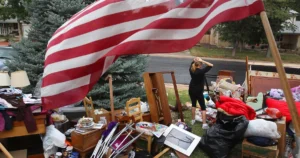
Hundreds of thousands of Americans do not have a home, and the problem is growing fastest among families with children. There are many reasons for the homelessness crisis, including too few affordable homes, rising rents, and wages that have not kept pace. One of our films follows a family pushed over the edge by a $25 rent increase, leaving everything they owned on the curb.
We want to share stories that show a way back, so people can have more than a roof over their heads. They can have a home.
Featured OGSP Story
Home
Getting a family off the street only works if they stay housed. Humble Design furnishes their empty spaces with care and makes it a home, where the national return-to-homelessness rate hovers near 50%, nearly all of their families are still home a year later.
Watch NowRelated Documentaries

Related Books
Related Podcasts

Related Organizations


Related Changemakers

Key Takeaways
- Some 93 percent of the 230,366 people in homeless families with children counted in January 2025 were sheltered.
- The number of people in homeless families with children dropped by 29,107 over the year, an 11 percent fall, while the national count fell 3 percent.
- Nearly 156,000 people, one in every three homeless individuals, reported chronic patterns of homelessness.
- Homelessness among veterans is 56 percent lower than in 2009, but between 2024 and 2025 it fell by only about 390 veterans, the smallest decline of any group.
Frequently Asked Questions
What is the difference between homeless and unhoused?
Federal rules use the word homeless, and they define it in four categories at 24 CFR 578.3. Many people and many organizations prefer unhoused. Our own recommendation Lead Me Home describes people living unhoused in cities across the West Coast. The word changes, the federal definition does not.
What is a housing voucher?
The Housing Choice Voucher program is, in HUD's own words, the federal government's major program for providing housing assistance to over 2.3 million American families.
What is fair market rent?
HUD estimates it every year. Fair Market Rents are estimates of 40th percentile gross rents for standard quality units within a metropolitan area or nonmetropolitan county. They set the payment standards for the Housing Choice Voucher program, rent ceilings for HOME and Emergency Solutions Grants, and maximum award amounts for Continuum of Care recipients. HUD posts them at least 30 days before they take effect, normally on October 1.
How short of cheap housing is the country?
By 7.2 million homes. That is the National Low Income Housing Coalition's count of rental homes affordable and available to renters with extremely low incomes, meaning at or below the federal poverty guideline or 30% of area median income, whichever is greater. Only 35 such homes exist for every 100 households that need one.
Which states have the fewest affordable homes?
Nevada has the fewest, at 16 affordable and available homes per 100 extremely low-income renter households. South Dakota has the most, at 73. No state has an adequate supply. In 13 of the 50 largest metropolitan areas the shortage passes 100,000 homes on its own.
How many of the poorest renters are severely cost burdened?
Most of them, in every state the National Low Income Housing Coalition measured. Among extremely low-income renter households the severe cost burden share is 82% in Arizona and Florida, 79% in California and 70% in Alabama.
Who wrote the book that changed how people talk about eviction?
Matthew Desmond. Evicted: Poverty and Profit in The American City won the 2017 Pulitzer Prize for General Nonfiction. The Princeton sociologist, named a MacArthur Genius, follows eight families in Milwaukee as they struggle to keep a roof over their heads. It also took the National Book Critics Circle Award and the Andrew Carnegie Medal.
Where can someone facing eviction get help today?
The Eviction Lab points people to justshelter.org for community and nationwide resources. The Lab itself publishes an Eviction Tracking System, a National Eviction Map and eviction rankings, so you can see what is happening where you live.
What can I donate to a family moving into an empty home?
Furniture or money, and your Saturday. Humble Design takes both, and it runs move-in days that need volunteers. A company can sponsor a whole home through a day of service. Details sit at humbledesign.org.
What is permanent supportive housing?
HUD describes it as permanent housing where housing assistance and supportive services together help households with at least one member who has a disability achieve housing stability. That member can be an adult or a child. Who qualifies follows the criteria in that year's funding notice, which may require chronic homelessness.
What is rapid rehousing?
HUD describes it as permanent housing that provides short-term rental assistance, up to three months, and medium-term assistance of four to twenty four months, along with supportive services. Case management runs at least monthly and can continue for up to six months after the rent help stops. The household holds a one year lease whatever the length of assistance.
What does chronically homeless mean?
HUD defines a chronically homeless person as a homeless individual with a disability, as defined in the McKinney-Vento Assistance Act, who lives in a place not meant for human habitation, a safe haven, or an emergency shelter. That person must have been homeless and living that way for at least 12 months, or on at least 4 separate occasions in the last 3 years that add up to 12 months, with each break at least 7 consecutive nights.
What are the four categories in the federal homeless definition?
HUD lists four. Literally homeless. Imminent risk of homelessness. Homeless under other federal statutes. Fleeing or attempting to flee domestic violence. Only projects serving people defined as chronically homeless have to document chronic status for HUD.
How does the government count homeless people?
Once a year, on a single night in January, communities run a Point-in-Time count. The January 2025 count found 745,652 people homeless across the country. HUD publishes it in the Annual Homelessness Assessment Report to Congress, alongside a Housing Inventory Count of the beds available.
What does the point in time count leave out?
HUD states it plainly. Point-in-Time counts do not include people living in taxpayer-funded housing assistance for the homeless. Counting those people as well brings the January 2025 figure to 1,456,923.
Is homelessness in the United States going up or down?
Both, depending on the window. The January 2025 count was a 3% decrease since 2024. Measured against 2013 it is a 27% increase. HUD chose 2013 as its baseline because that is when Housing First policy changes began inside its homelessness programs.
How many people sleep outside instead of in a shelter?
On a single night in January 2025, 266,320 people were living unsheltered. That is up 36% since 2013, a steeper rise than homelessness overall.
Has chronic homelessness got better or worse?
Worse, by the federal count. Chronic homelessness increased 81% between 2013 and 2025. Over the same years, taxpayer funded beds increased 151% and Continuum of Care spending increased 111%.
What is Housing First and does the government still back it?
Housing First is the policy approach HUD adopted in its homelessness programs from around 2013. In 2026 the department turned against it. Secretary Scott Turner said the status quo of Housing First has failed to meaningfully reduce homelessness, resulting in crisis levels of people living on the streets, and that HUD is restoring its programs to advance recovery and self-sufficiency. That is the department's stated position.
How do I help with this in my own city?
Start with who already does it near you. Humble Design works in Detroit, Chicago, Cleveland and San Diego. It began in Detroit in 2009 when Treger Strasberg found out a friend and her children were sleeping on the floor of an unfurnished home, so she collected furniture from her own house and her neighbors' until the place was full.